As technology continues to evolve, the film industry is undergoing a transformation with the rise of robotics and automation in cinematography. These advancements are allowing filmmakers to achieve shots and effects that were once only possible in big-budget productions, changing the way we create and consume films.
Robotic Camera Rigs: Precision and Flexibility
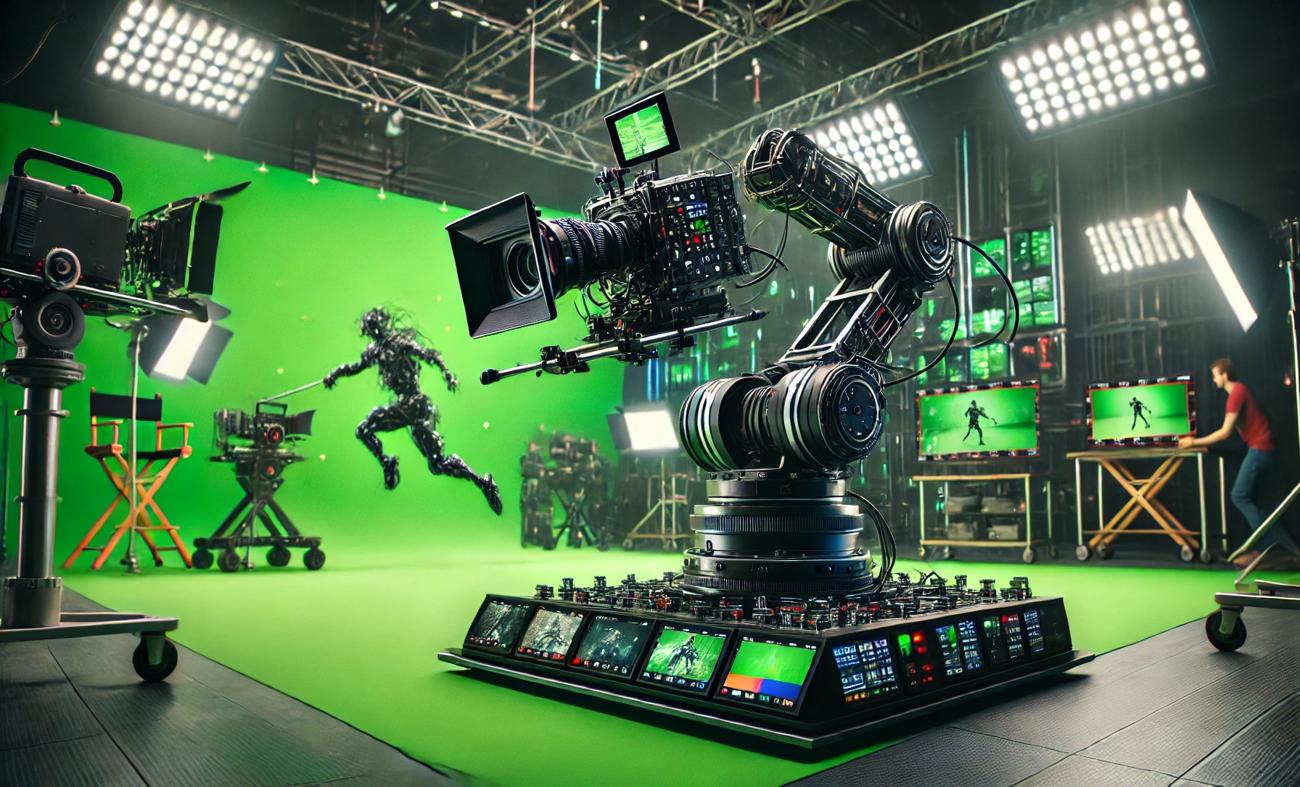
One of the most significant developments is the use of robotic camera rigs. These advanced systems allow for precision and flexibility that human operators simply can’t achieve. Mounted on robotic arms, these cameras can move smoothly and quickly across complex scenes, capturing action sequences with perfect accuracy. Whether it’s a high-speed chase or a detailed close-up, robotic rigs can seamlessly navigate the set, providing directors with more creative control and less room for error.
Enhancing Creativity with Automation
Automation in filmmaking also opens up new possibilities for creativity. With programmable camera movements, filmmakers can replicate shots with exact precision, ensuring continuity and consistency throughout multiple takes. This capability is especially useful in visual effects-heavy scenes, where camera motion needs to match perfectly with CGI elements. Additionally, directors can now experiment with complex, multi-dimensional shots that would be too difficult or risky for human operators.
“THE FUTURE IS NOWWWWW.”
Remote Operation and Safety
Robotic cameras can also be operated remotely, allowing filmmakers to capture dangerous or physically challenging shots without risking crew members’ safety. For action-heavy genres like thrillers or sci-fi films, this technology has become invaluable, ensuring that no shot is too difficult or unsafe to execute.
The Impact on Film Production Efficiency
In addition to expanding creative possibilities, the use of robotics and automation in cinematography significantly improves production efficiency. Robotic rigs and automated systems can execute complex camera movements with speed and accuracy, reducing the time needed to set up and reshoot scenes. This precision minimizes downtime on set, allowing filmmakers to shoot more footage in less time. Moreover, automation streamlines the post-production process, especially when paired with pre-programmed sequences that integrate seamlessly with visual effects. As a result, films can be produced faster and with greater consistency, lowering costs while maintaining high production quality.
“Lively, confessional, and entertaining …”
As we look toward the future of filmmaking, robotics and automation are set to play an even larger role, pushing the boundaries of what’s possible in cinematic storytelling. These innovations not only enhance efficiency on set but also empower filmmakers to create more visually stunning and technically complex films than ever before.
Aliquam lorem ante, dapibus in, viverra quis, feugiat a, tellus. Phasellus viverra nulla ut metus varius laoreet. Quisque rutrum. Aenean imperdiet venenatis.





Jesse Cox
Aliquam lorem ante, dapibus in, viverra quis, feugiat a, tellus. Phasellus viverra nulla ut metus varius laoreet. Quisque rutrum. Aenean imperdiet venenatis.
Amber Webb
Maecenas nec odio et ante tincidunt tempus.